An instrument procedure
An eccentricity test on a real analytical balance. One photo finds the balance, a marker shows where the weight goes, and the readings are taken once they settle.
 Alepou
A VARLIS™ product
Four spoken requests to Claude in Alepou, four headset apps: an instrument procedure, a service procedure, a puzzle and a game. None of them is built into the headset app.
Each answer cuts to the app it describes, running on a Meta Quest 3. From 1:44 the film shows how it works.
An eccentricity test on a real analytical balance. One photo finds the balance, a marker shows where the weight goes, and the readings are taken once they settle.
Changing the pump-head seals on a Waters HPLC, from publicly available models and the published user guide. Claude labels it a demonstration, not a qualified service procedure.
A Rubik’s cube solver. Claude corrects the request: three turning axes, nine layers that turn.
Go against KataGo on the PC’s GPU, in a low-poly Japanese tea room with a cat on the veranda. Claude asks before downloading KataGo from its official releases.
The same headset app runs every one of them. Each film opens on YouTube.
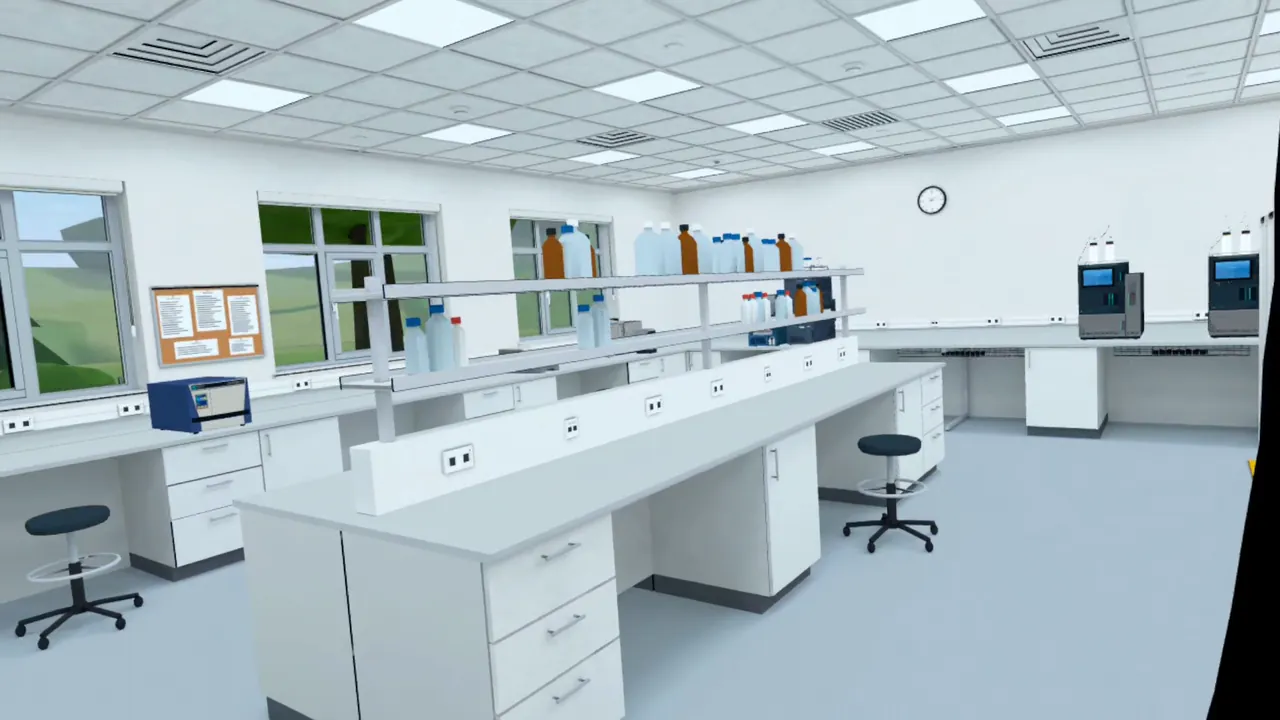 Spatial AI, Big Lab · 2:22
One spoken request for a big laboratory and a long list of instruments. The AI plans the work and hands it to specialist builders.
Recorded in the headset and edited for length. The spoken request was re-recorded for the film; Claude’s line is as recorded.
Watch Big Lab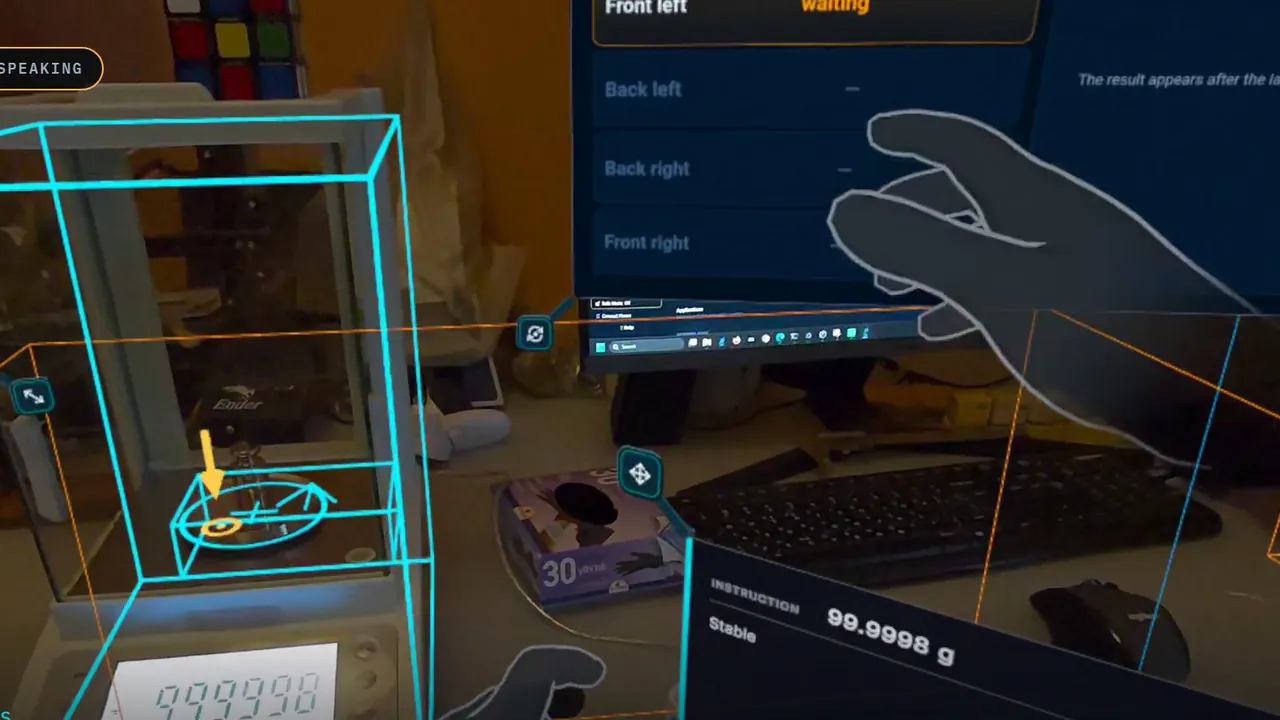 Spatial AI in the lab · 4:13
One spoken request, and the headset guides an eccentricity test on a real analytical balance, read to 0.1 mg over a USB cable to the PC.
One continuous take; waits are sped up and marked on screen.
Watch the balance test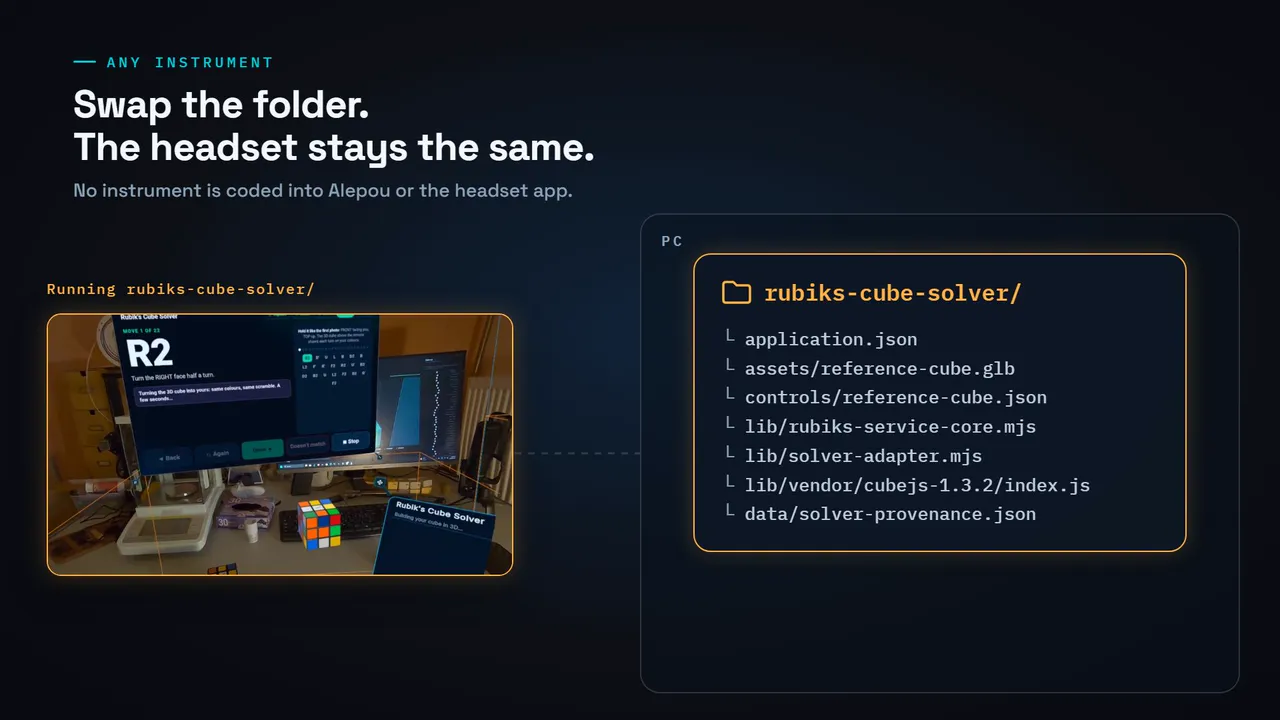
The headset is a universal client, and a workflow is a folder of plain files, made by describing it to an AI. Swap the folder, and the headset stays the same.
Watch on YouTube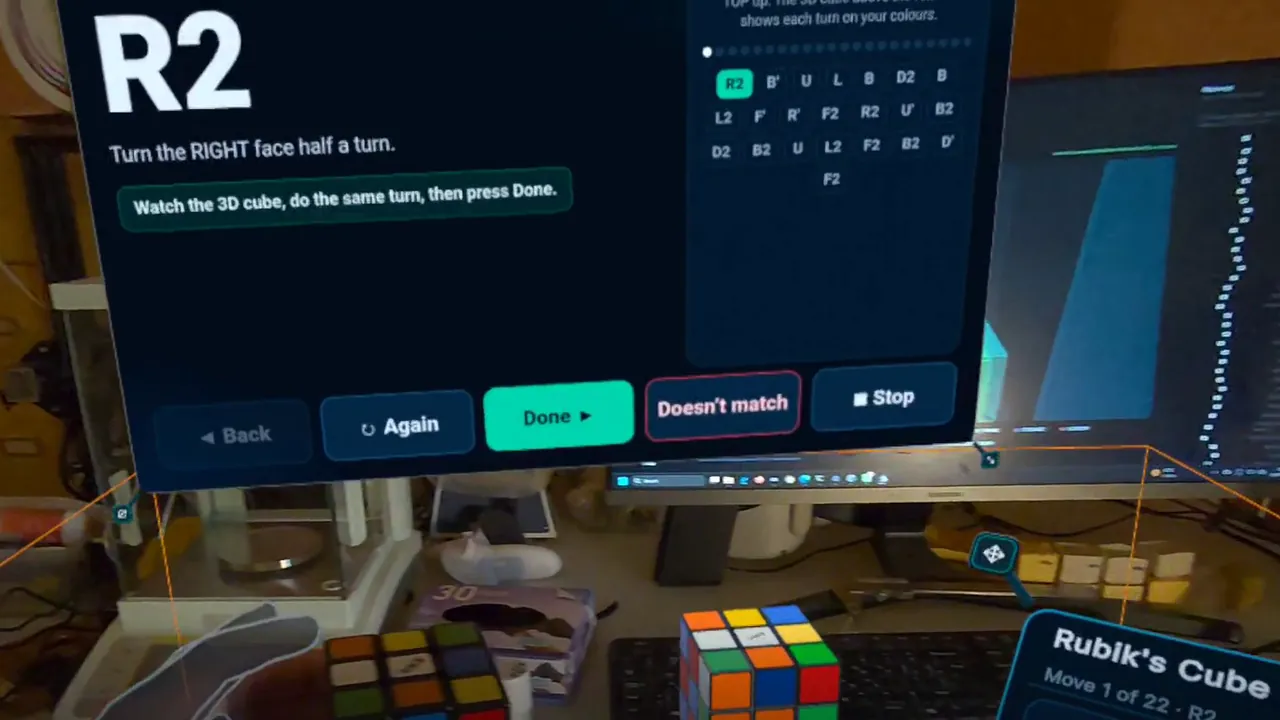
The headset reads a real, scrambled cube from six photos and checks it is solvable. A solver on the PC finds 22 moves, guided one at a time on a 3D cube. The headset app has no cube code, model or animations.
Watch on YouTube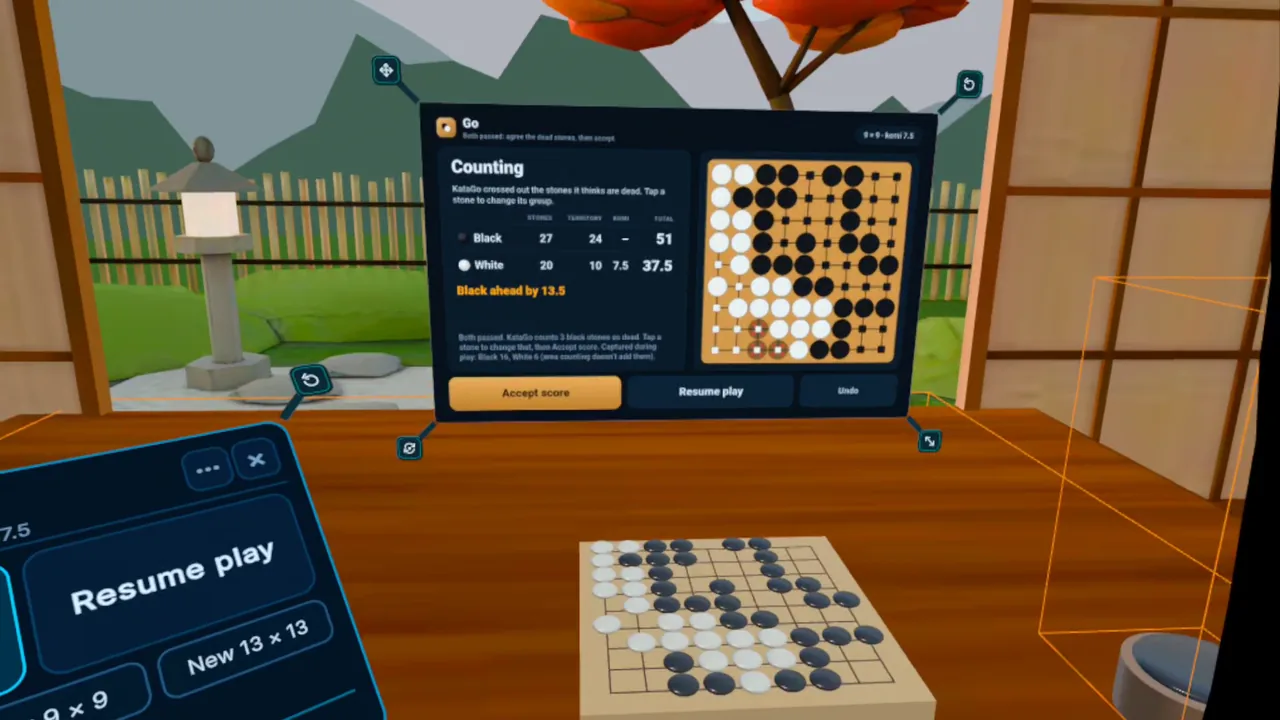
A 9 × 9 board in a tea room an AI built, against KataGo on the PC playing like a 5 kyu human. Game 1 ends in a resignation, game 2 is lost by half a point, game 3 is won by 13.5. The headset app knows nothing about Go.
Watch on YouTube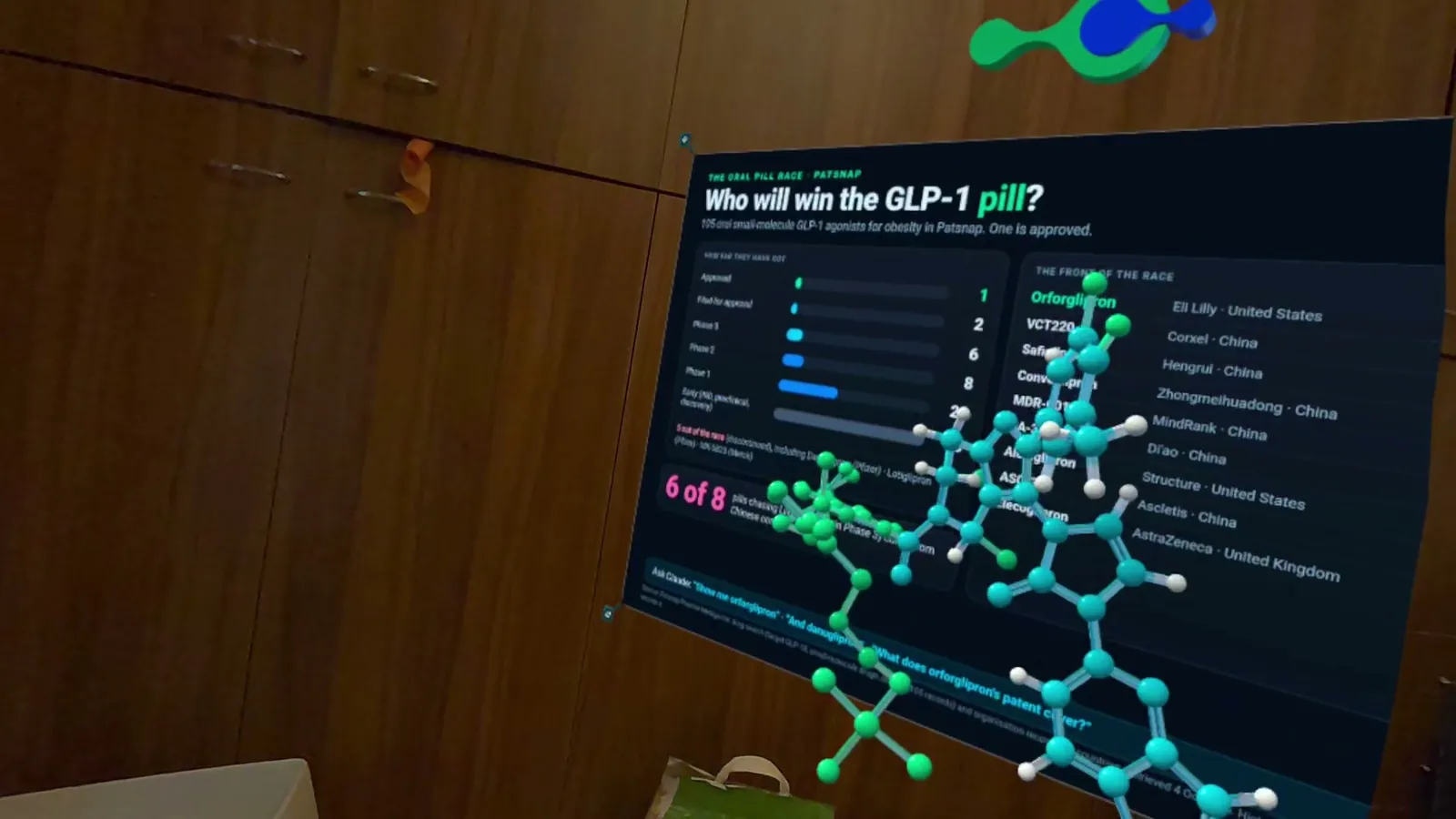
Ask a question out loud, and an AI agent queries enterprise life-science data (drugs, deals, patents, chemical structures) and puts the answers in the room: a drug-pipeline chart, 3D molecules, a patent family. Alepou’s first public spatial demo.
Watch on YouTubeThe Rubik’s cube and Go films are each edited for length from one continuous take on a Meta Quest 3.
The headset runs one Alepou client app that never changes. Each app (a lab procedure, a puzzle, a game) is a folder of plain files, built by AI agents in sessions Alepou supervises on your own computer. Everything else runs there too.
No instrument, cube or game is coded into the headset app. Underneath is Alepou’s workspace for long-running AI work, where every change is a task tied to a git commit, so the AI’s work stays inspectable.
“So the person who knows the instrument builds the tool. No coding. No AI expertise.”
alepou.ai is its product site. To talk about an instrument, a procedure or a demo, write to info@varlis.io.